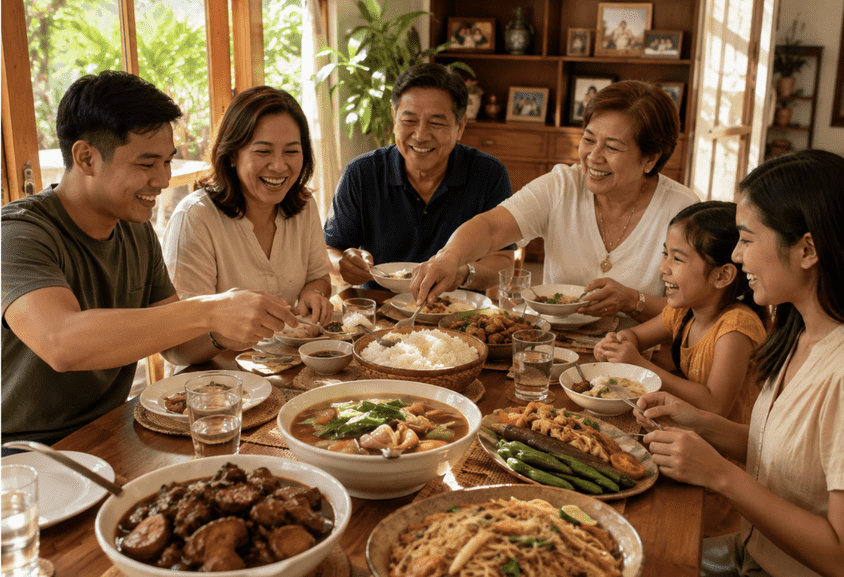
Food has always played an important role in Filipino life. Across generations, meals have brought families together, connected communities, and preserved traditions.
In many Filipino homes, eating is rarely just about the food on the plate. It is also about the conversations, laughter, stories, and memories created around the table.
The Dining Table as a Place for Connection
The dining table can be one of the most important spaces in a Filipino home. It is where families gather after a busy day and where conversations naturally happen.
Even when everyone has different schedules, sharing a meal can provide an opportunity to reconnect. A few minutes spent asking about someone’s day can turn an ordinary dinner into a meaningful family moment.
Sharing Food Is a Filipino Tradition
Filipino dining culture often involves sharing. Dishes are commonly placed at the center of the table, allowing everyone to enjoy different foods together.
This setup reflects a sense of community and togetherness. Instead of preparing separate meals for every person, families can share several dishes and enjoy a variety of flavors in one sitting.
Food and Filipino Hospitality
One of the most recognizable aspects of Filipino culture is hospitality. When visitors arrive, offering food is often one of the first ways Filipinos show care and welcome.
A guest may be offered coffee, snacks, fruit, or a full meal—even when the visit was unexpected. This simple gesture reflects the importance of generosity and making others feel at home.
Recipes That Carry Family Stories
Many Filipino dishes are connected to memories and family traditions. Recipes for dishes such as adobo, sinigang, pancit, and various kakanin are often passed from one generation to another.
Sometimes, these recipes are not written down. Instead, they are learned by watching a parent or grandparent cook. A familiar flavor can bring back memories of childhood, family gatherings, and special celebrations.
Celebrations Are Often Centered on Food
Birthdays, fiestas, holidays, and reunions often come with a generous spread of food. For Filipinos, preparing a meal for a celebration is one way of showing love and appreciation.
From a simple family gathering to a large celebration, food becomes part of the experience. The meal is not only something to eat—it becomes part of the memory people take home.
Keeping the Tradition Alive
Modern lifestyles may make it difficult for families to eat together every day. Work, school, traffic, and busy schedules can all affect family routines.
Still, making time for shared meals whenever possible can help preserve this important tradition. It does not have to be elaborate. Even a simple meal shared without distractions can create meaningful moments.
Final Thoughts
Filipino family meals remind us that food is often about more than taste. It is about relationships, traditions, and the people we share it with. In a fast-paced world, sitting down together—even for one meal—can be a simple but powerful way to stay connected to family and culture.